
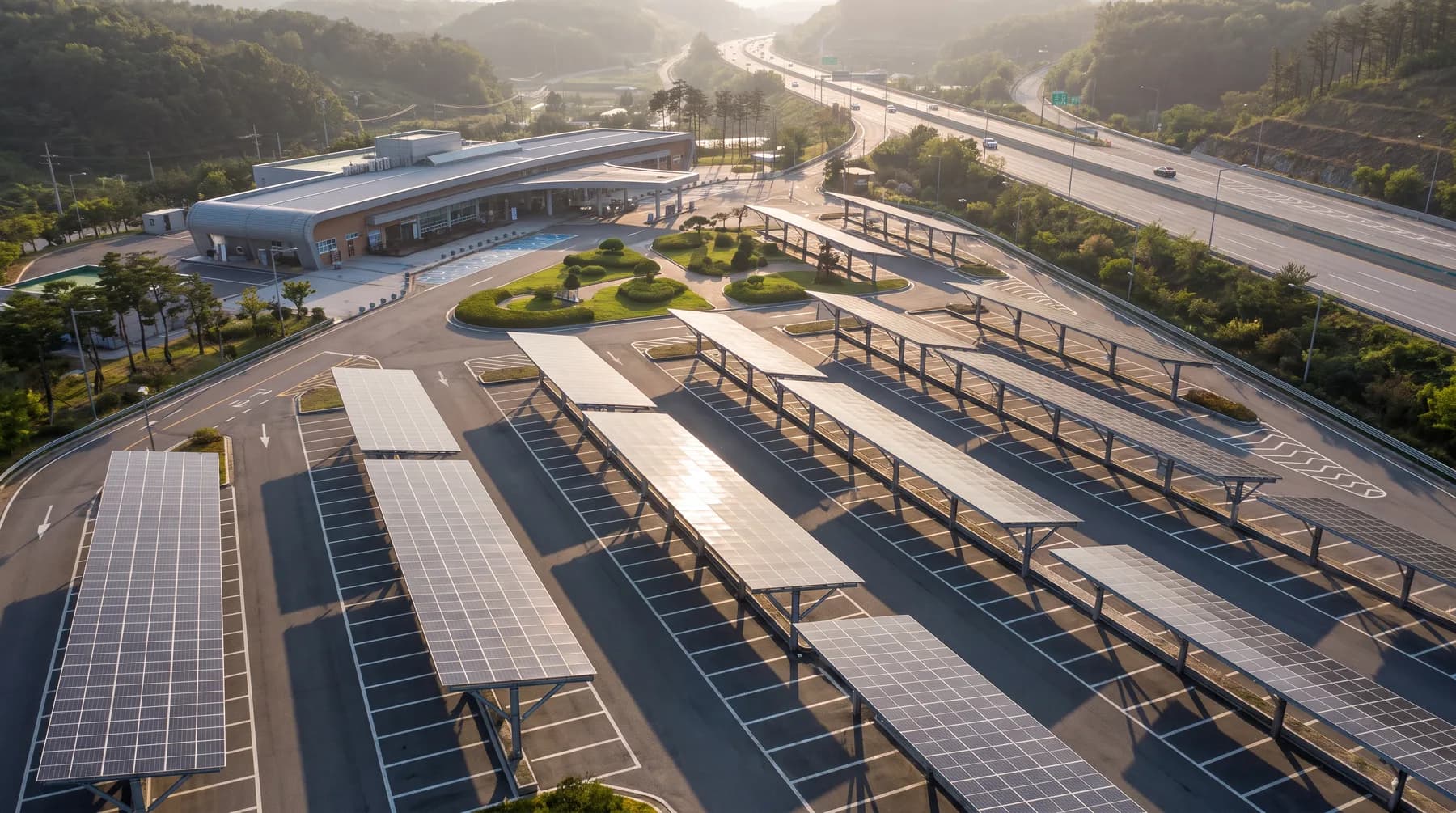
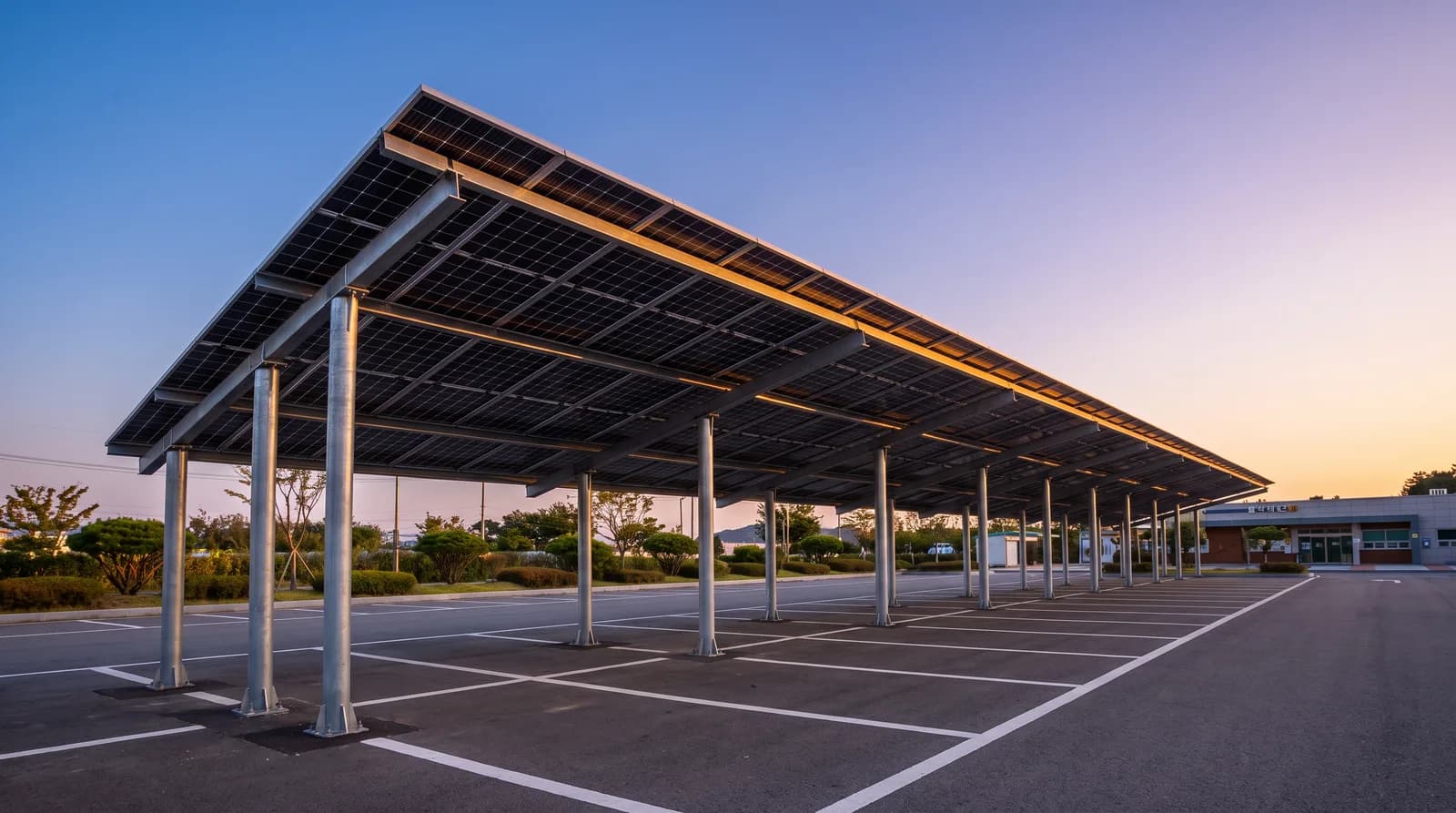
Photograph of a solar canopy over a parking lot

Solar Carport

Solar Carport
A canopy that generates without taking the parking away

One canopy structure earns generation revenue and improves the parking at the same time.
Design EV charging into it and the asset works harder still.

A solar carport puts a canopy structure over the parking bays and mounts solar modules on top of it, so the parking keeps working while the site earns generation revenue and shades the cars.

A solar carport puts a canopy structure over the parking bays and mounts solar modules on top of it, so the parking keeps working while the site earns generation revenue and shades the cars.

Site photograph related to Solar Carport
What we check while the parking lot stays in use: circulation · column layout · snow load · spare capacity in the incoming supply

Why a parking lot is a good site

A parking lot is already level, usually open on all sides, and often large. Nothing has to be done to the land itself — the structure goes up on top — so the permitting burden is lighter than for ground-mount.

The practical benefits are substantial on their own. Cabin temperatures drop in summer, snow and rain are kept off, and users notice. It works particularly well at logistics centers, large retail sites, and public sector parking lots.

Add EV chargers and the power generated during the day can go straight into the cars on site, easing the grid load and the electricity bill together.

What the design has to settle

  • Structural type

    Single-post, double-post, or continuous, chosen to fit the bays and the circulation. Columns are placed so they do not cost you spaces.

  • Clear height

    The height under the canopy is set differently for standard cars and for sites that trucks have to enter.

  • Foundations and bearing capacity

    The ground condition beneath the existing paving determines the foundation type and how much of the surface has to be opened up.

  • Drainage and snow load

    Rainwater routing and snow load are built into the structural design.

  • Electrical intake

    We check the capacity and location of the existing incoming supply to see which combination of self-consumption, sale, and charging is possible.

  • Staying open during construction

    We plan the work section by section so the parking lot keeps operating.

Where the public parking lot mandate is heading

Policy work is under way to make solar installation mandatory at municipal and public parking lots. The rules are still being put in place, so the standard that applies to a given facility and the date it takes effect have to be confirmed with the local government for that site.

Public institutions are separately subject to a mandatory renewable energy installation ratio. It stands at 36% for 2026 and 2027 and is scheduled to rise to 40% in 2030. A solar carport is a practical way to meet it.

Source: Korea Energy Agency, New and Renewable Energy Center, guidance on the mandatory installation requirement for public institutions (verified 2026-08-22). The specific facilities covered by a carport solar mandate, and the date it applies, have to be confirmed individually with the local government for the site.

Benefit

What you get out of this

Revenue

Where the revenue comes from

  • Generation revenue and lower bills

    A mixed structure is possible: use the power on site and sell what is left.

  • Better parking

    Shade and rain cover make the lot better to use. At retail sites it also brings people in.

  • EV charging on site

    Daytime generation goes straight into the chargers, easing the grid load and the bill together.

  • Meeting the public sector ratio

    Public institutions can use it to meet their mandatory renewable energy installation ratio.

Actual amounts and rates of return vary with the conditions at the site. The assessment report works them out for your site.

FAQ

Frequently asked questions

The questions we are asked most about Solar Carport.

Placing the columns on the bay boundaries at the design stage keeps the loss to a minimum. We produce several layouts and put forward the ones that cost no spaces first.

No. Building it section by section keeps the lot in operation. The construction plan is coordinated with your operating schedule.

Yes. We size it against the generation capacity, the spare capacity in the existing incoming supply, and the charger specification. Feeding daytime output straight into the chargers gives the better economics.

Free assessment

It starts with one line: the site address.

Leave the address and a way to reach you. We send back an initial assessment report within about five business days.
If the site stands up as a project, the report also sets out competitive EPC bids and financing terms.

Available to landowners, building owners, or their authorized representatives · Results come back as a report