

What agrivoltaics is
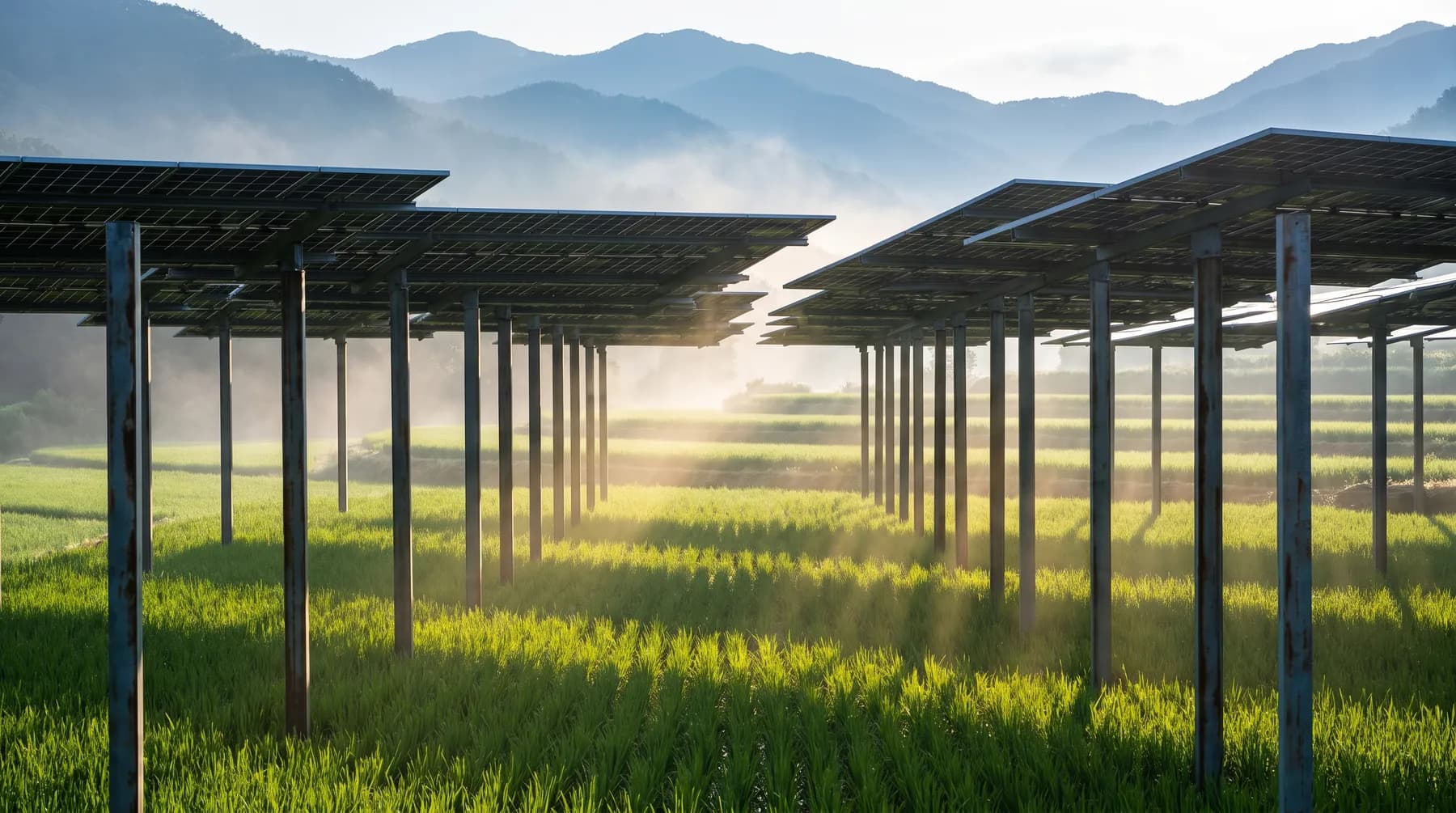
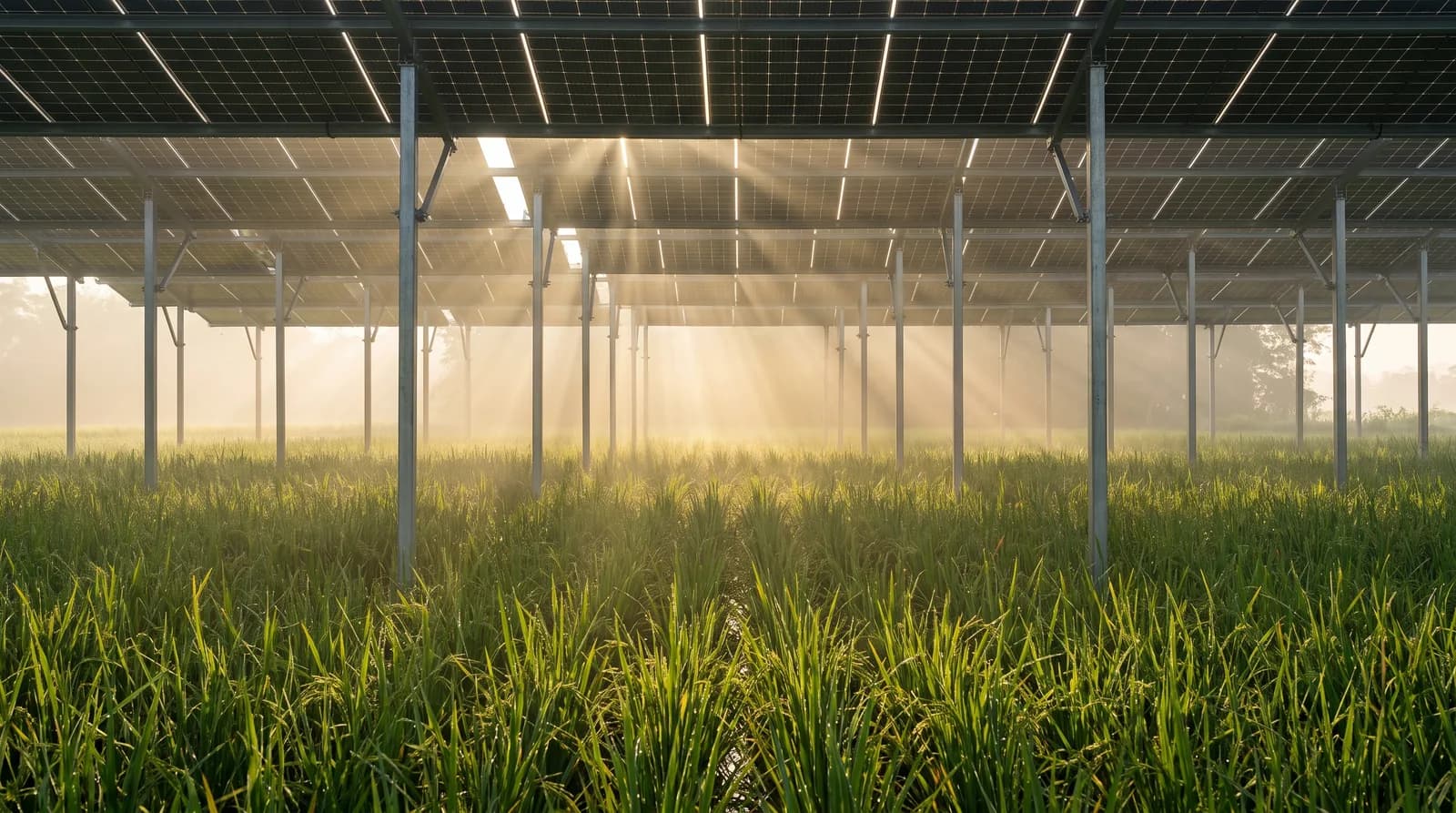
Ordinary ground-mount solar converts farmland to another use. Agrivoltaics does not. The registered land category and the farming both stay in place, and the structure is raised high above the crop.
Gaps between the panels let light through, so the crop keeps growing. Farm income and generation revenue come off the same field. The heart of the design is setting column spacing and clearance so farm machinery can still work.
Legislation supporting agrivoltaics was enacted in 2026 and the framework around it is still being put in order. The Enforcement Decree and the detailed standards are not yet final, so the application requirements and the permitted term of use have to be checked against the notice in force when you start.
The detailed implementation standards under the agrivoltaics legislation were still being finalized as of 22 August 2026. The binding requirements are those in the notices issued by the relevant authorities.
What we look at
The crop
Shade tolerance differs by crop. Panel spacing and the shading ratio are set to the crop.
Structure height
Farm machinery has to be able to work underneath. The higher the structure, the higher the structural cost.
Continuity of farming
Generating while letting the field go idle puts the project's eligibility at risk. A real farming plan is required.
Term of use
The land is used temporarily rather than converted, so the permitted term and the conditions for extension set the length of the project.
Local acceptance
A community-participation structure carries regulatory advantages and reduces friction with neighbors.
Repowering: making an old plant young again
At a plant that has run for many years, module degradation and aging inverters cut the energy yield noticeably. Keep the same site and the same grid connection rights, replace only the equipment with higher-efficiency products, and the yield comes back.
Holding the connection rights already is the biggest advantage repowering has. With new projects held up in the grid connection queue, raising the value of a plant that is already connected is the realistic option.
In a period of regulatory transition, though, the effect of an equipment change on contract and certification terms has to be weighed as well. GRIDAEND calculates the replacement cost, the yield recovered, and the regulatory consequences together, and gives you the basis for a decision.
Other types we assess
Floating solar
Reservoirs and unused water surfaces. It carries its own permitting and environmental review. We take enquiries and assess them.
Livestock barn and greenhouse roofs
Using the roofs of agricultural buildings. Structural capacity and the effect on how the facility operates are the main things to check.
Idle state and public land
Measures such as reduced rent on state property are under discussion, so we assess these together with local governments and public institutions.