
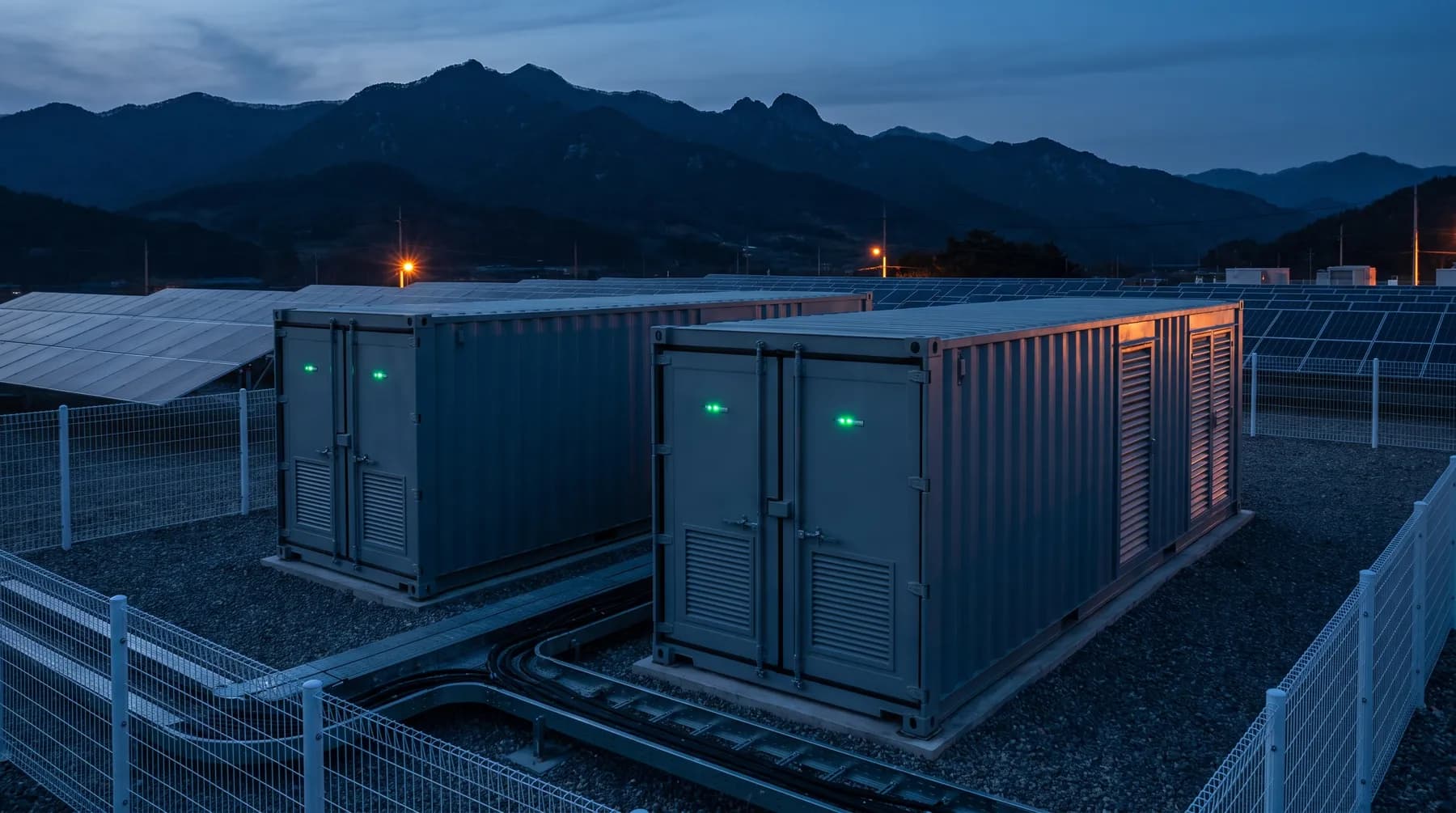
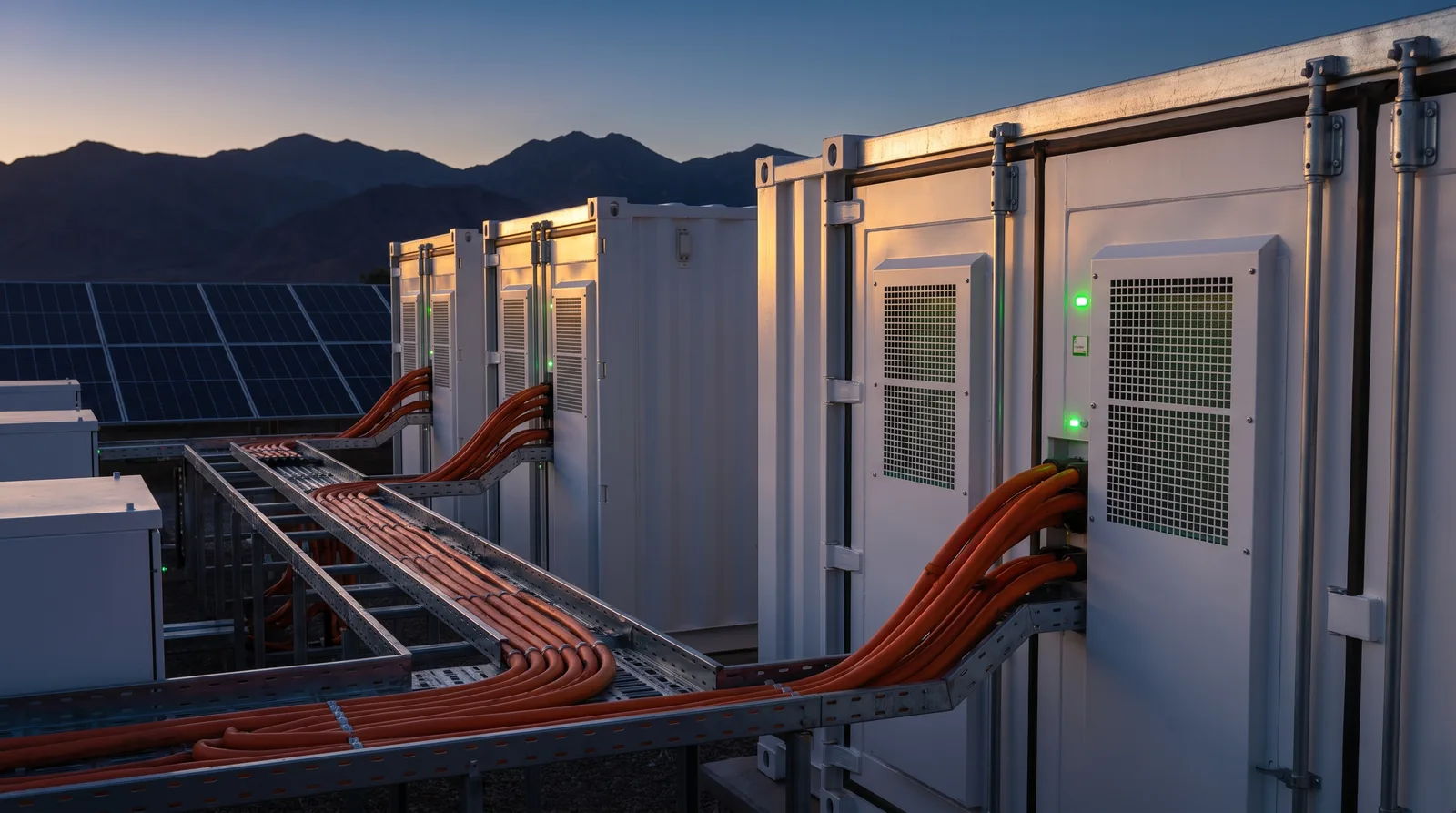
Photograph of energy storage containers beside a solar plant

Energy Storage System

Energy Storage
Cutting the peak and moving when the revenue arrives

Paired with solar, shaving peak demand, or trading in the power market.
The capacity, the dispatch strategy, and the safety requirements are entirely different in each case.
We settle the purpose first, then calculate whether it pays.

An energy storage system (ESS) holds electricity in batteries so it can be used or sold at a chosen moment. Sizing and dispatch strategy follow the purpose — pairing with solar, shaving peak demand, or participating in the power market.

An energy storage system (ESS) holds electricity in batteries so it can be used or sold at a chosen moment. Sizing and dispatch strategy follow the purpose — pairing with solar, shaving peak demand, or participating in the power market.

Site photograph related to Energy Storage
How storage creates revenue: when it charges · when it discharges · peak shaving

What storage actually solves

Solar makes electricity only while the sun is up. The hours when electricity is most expensive and most needed are often after it sets. Storage closes that gap.

It holds the surplus from the middle of the day to use or sell in the evening, cuts consumption in the expensive hours, and supplies power when the market calls for it, for a payment.

As renewables grow, the grid becomes less stable and curtailment rises. Nationwide curtailment was 169,812 MWh in 2025, and 164,012 MWh in the first half of 2026 alone. The value of somewhere to put generation instead of throwing it away rises with it.

Source: Korea Power Exchange data submitted to the office of Assembly Member KIM Wi-sang, reported by Maeil Shinmun on 2026-08-04

Three purposes, three designs

PurposeWhat it doesWho it suitsWhat decides it
Paired with solarStores generation and shifts it to a different hour to sell, or raises the self-consumption rateGenerators, and sites that consume their own outputThe balance between the generation profile and the storage capacity, and what the rules recognize
Peak shavingLowers consumption in the peak demand hours, cutting both the capacity charge and the energy chargeFactories and buildings with high contracted capacity and a pronounced peakLoad pattern analysis, the effect of adjusting contracted capacity, and the payback period
Market participationOffers capacity to the power market and to ancillary services for paymentOperators above a certain size, and VPP participantsEligibility requirements, metering and communications equipment, and how settlement works

Swipe the table sideways to see the rest

Safety weighs as much as economics

Storage means handling batteries. Fire safety standards, siting requirements, fire protection equipment, and a monitoring regime for operation all have to be in the design from the start. Retrofitting them costs far more.

Indoor installation and outdoor container systems carry different requirements, and the building use and the separation conditions determine which is available. We also look at how the battery management system (BMS), the power conversion system (PCS), and the supervisory platform are designed to work together.

Insurance terms are checked in advance too. Underwriting conditions and rates move with the installation method and the level of safety equipment, so it is better to build the insurer's requirements into the design.

How we approach it

The first thing we settle is why storage is needed at all. Fixing the capacity before the purpose is the quickest route to over-investment.

Then we calculate with real data. We put in the generation profile, the load pattern, and the tariff, vary the storage capacity, and find the point where the payback period is shortest. If it does not pay, we say so.

Once the design is fixed we compare and select partner EPCs and products, and for the operating phase we set the charge and discharge strategy alongside a plan for managing degradation.

Benefit

What you get out of this

Revenue

Where the revenue comes from

  • Lower peak charges

    Cutting consumption in the peak hours reduces the capacity charge and the energy charge together.

  • Higher self-consumption

    Storing surplus solar during the day and using it in the evening means buying less power.

  • Less lost to curtailment

    Power the grid would otherwise refuse is stored and keeps its chance of being sold.

  • Revenue from the power market

    Where the requirements are met, participation in the power market and ancillary services is worth assessing as a further revenue line.

  • Backup supply

    The design can include backup power to critical equipment during an outage.

Actual amounts and rates of return vary with the conditions at the site. The assessment report works them out for your site.

FAQ

Frequently asked questions

The questions we are asked most about Energy Storage.

It depends on the purpose and the conditions. Bill savings at a site with a pronounced peak are usually clear-cut, but pairing with a generating plant turns heavily on the rules and the prices in force. We assess the economics first, and if the result falls short of the threshold, we do not recommend it.

It is battery equipment, so safety design is not optional. Siting requirements, fire protection equipment, the battery management system, and continuous monitoring go in from the start, and we check the insurer's underwriting conditions alongside them.

That has to be calculated from the load pattern and the generation profile. A larger system does more but costs more, so the design goal is the point at which the payback period is shortest.

Performance falls off gradually with the number of charge and discharge cycles and with the operating conditions. The economics have to account for the annual degradation rate and the replacement point, and warranty terms are compared when the product is selected.

Free assessment

It starts with one line: the site address.

Leave the address and a way to reach you. We send back an initial assessment report within about five business days.
If the site stands up as a project, the report also sets out competitive EPC bids and financing terms.

Available to landowners, building owners, or their authorized representatives · Results come back as a report